HDB & BTO Window Film Installation in Singapore
Professional window film solutions and onsite product demonstrations for Singapore properties.
Request a Free Consultation
Living in an HDB flat or moving into a new BTO often means making the most of natural light while managing Singapore's strong sun, humidity and afternoon heat. Large living-room windows can brighten a home beautifully, but they can also create hot spots, glare on televisions and monitors, and uneven temperatures between rooms. HDB and BTO window film gives homeowners a practical way to improve comfort through the existing glass without replacing the entire window system.
Solar Heroes supplies and installs architectural solar-control films for Singapore homes, with film options selected according to window orientation, glass type, daylight preference, glare levels, privacy needs and budget. The objective is not to make every home darker. A well-chosen film should solve the specific problem at the window while preserving the amount of daylight and the appearance that the household prefers. For HDB owners, that means looking beyond a single headline percentage and comparing useful measures such as Visible Light Transmittance (VLT), Visible Light Reflectance (VLR) and Total Solar Energy Rejected (TSER).
Why HDB Flats Can Feel Hot Even With Air-Conditioning
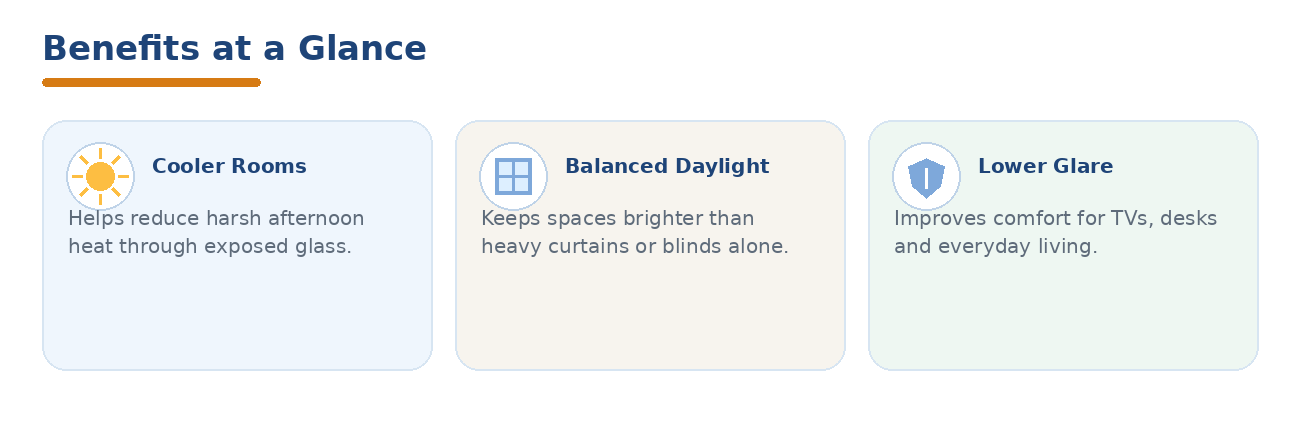
A room can feel warm even when the air-conditioner is working because sunlight entering through glass adds radiant heat directly to the space. The effect is often most noticeable in living rooms, bedrooms and studies that receive long periods of direct sun. West-facing windows can be particularly uncomfortable in the afternoon, while high-floor units may have fewer nearby buildings to provide shade.
Solar-control window film changes how solar energy interacts with the glass. Depending on the film, part of the energy is reflected, part is absorbed and less is transmitted into the room. This can reduce the solar load coming through the window, but it is important to keep expectations realistic. Film does not stop heat entering through walls, the roof, open doors, ventilation or internal appliances. It is one component of a broader comfort strategy that can also include curtains, blinds, shading, fans and efficient air-conditioning.
This distinction matters because it helps HDB owners choose the right solution. If the main discomfort appears only when direct sun hits the glass, window film may address a meaningful part of the problem. If the whole flat remains warm day and night, the cause may be broader than the windows alone.
Choosing Window Film by Room Rather Than Using One Film Everywhere
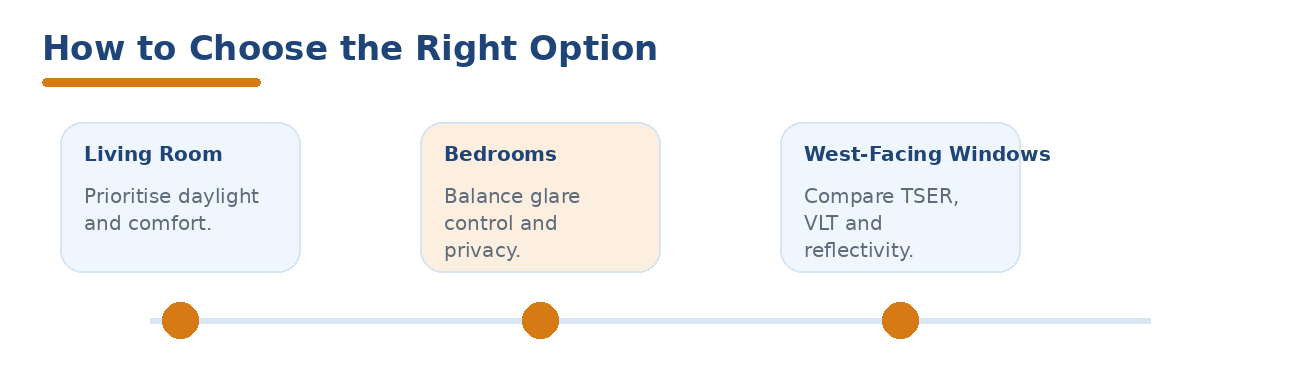
Different rooms often need different balances of heat control, brightness and privacy. The living room may benefit from a brighter solar-control film that preserves the view and daylight. A west-facing bedroom may justify a darker option if afternoon glare and heat are severe. A home office may need glare reduction first, especially where the screen is positioned opposite or beside a window.
For living rooms, many homeowners prefer high visible-light transmission because the room is used throughout the day. Solar Heroes' Spectra nano-ceramic and P99 multilayer ranges include options designed to retain useful daylight while adding solar control. Spectra 65, for example, is currently listed with 70% VLT, 7% VLR and 50% TSER, while P9970 is listed with 69% VLT, 8% VLR and 55% TSER. These figures illustrate why two films that both appear relatively clear can still have different overall solar performance.
Bedrooms can be approached differently. A lower-VLT film may reduce brightness and glare more strongly, which can be helpful for rooms exposed to intense afternoon sun. The right choice should still be tested on the actual glass because the appearance of a film changes with exterior brightness, interior lighting, glass colour and surrounding buildings.
Window Film for West-Facing HDB and BTO Units
West-facing HDB windows are one of the most common reasons homeowners consider solar film. The sun is lower in the sky during the later part of the day, so direct solar radiation can penetrate deeper into a room. Sofas, floors, desks and television areas near the window may become noticeably warmer. Glare can also make screens difficult to view.
The best solution is not automatically the darkest film. A very dark film may control brightness effectively but can reduce daylight more than necessary. A better selection process begins by identifying the actual priority: is the household trying to reduce solar heat, reduce visual glare, increase daytime privacy, preserve the outdoor view, or achieve several of these at once?
TSER is especially useful when heat control is the main goal because it represents the total portion of solar energy rejected by the glazing system under the stated test conditions. VLT helps indicate how bright the glass may appear after installation. VLR indicates how reflective the glass may look. Reviewing these values together produces a more meaningful decision than choosing by tint shade alone.
Solar Film for New BTO Renovations
Installing window film during a BTO renovation can be convenient because access to the windows is usually easier before the home is fully furnished. It can also allow the owner to coordinate window treatment decisions with curtains, blinds, furniture placement and interior colour choices.
However, film selection should still be based on the completed living environment. A bright, lightly furnished unit may look very different once curtains, cabinetry and darker interior finishes are installed. If possible, homeowners should compare physical film samples on the actual window during daytime. That helps reveal changes in brightness, colour, reflectivity and exterior view more accurately than a brochure or online photograph.
Owners should also identify any special glazing before installation. Tempered glass, laminated glass, insulated glazing, Low-E coatings and other specialised constructions may require compatibility assessment. A professional installer should select a film that is appropriate for the specific glass and application rather than assuming every architectural film is suitable for every window.
Understanding VLT, VLR and TSER Before You Choose
Three specifications are particularly useful for HDB buyers. Visible Light Transmittance, or VLT, is the percentage of visible light that passes through the film-and-glass system. A higher VLT generally means a brighter appearance. Visible Light Reflectance, or VLR, indicates how much visible light is reflected; higher values can create a more mirror-like appearance in suitable lighting conditions. Total Solar Energy Rejected, or TSER, is a broader measure of how much total solar energy is rejected.
These numbers should be read together. Infrared rejection is sometimes heavily promoted, but an IR percentage measured at a single wavelength should not be treated as a substitute for TSER. For a homeowner trying to compare overall solar performance, TSER is usually the more useful headline measure, provided the figures are based on comparable testing.
Solar Heroes currently offers multiple film constructions, including Black Pearl nano-carbon hybrid films, Ornyx metallised films, Spectra nano-ceramic films and P99 multilayer polyester films. This gives homeowners options ranging from brighter, low-reflectivity appearances to darker or more reflective solutions where stronger glare control is desired.
Representative Solar Heroes Film Comparison
| Film | Construction | VLT | VLR | TSER | Best-fit consideration |
|---|---|---|---|---|---|
| Spectra 65 | Nano ceramic | 70% | 7% | 50% | High daylight, low reflectivity |
| Spectra 50 | Nano ceramic | 50% | 7% | 55% | Balanced daylight and solar control |
| Spectra 35 | Nano ceramic | 37% | 6% | 60% | Stronger glare and solar control |
| P9970 | Multilayer polyester | 69% | 8% | 55% | Clearer architectural appearance |
| P9940 | Multilayer polyester | 41% | 8% | 62% | Stronger premium solar control |
Specifications shown are based on current Solar Heroes published service-page data and should be checked against the latest technical data sheet before quotation or publication.
Privacy, Daylight and Night-Time Expectations
HDB owners frequently want more daytime privacy without losing the outdoor view. Tinted or reflective solar films can reduce visibility from the brighter side of the glass under suitable daytime conditions, but they should not be described as permanent one-way privacy. When the interior becomes brighter than the outside at night, the privacy effect can weaken or reverse.
If round-the-clock visual privacy is required, especially for bathrooms, service yards or glass panels where an outside view is not necessary, a frosted or opaque privacy solution may be more appropriate. Curtains or blinds remain useful for night privacy in bedrooms and living areas.
This is why a good HDB window film recommendation should begin with a conversation about how the room is actually used. A film that is ideal for a bright living room may not be the right solution for a bedroom facing a common corridor, and a privacy-first film may be unnecessary for a high-floor window with no direct sightline from nearby blocks.
Professional Installation and What to Expect
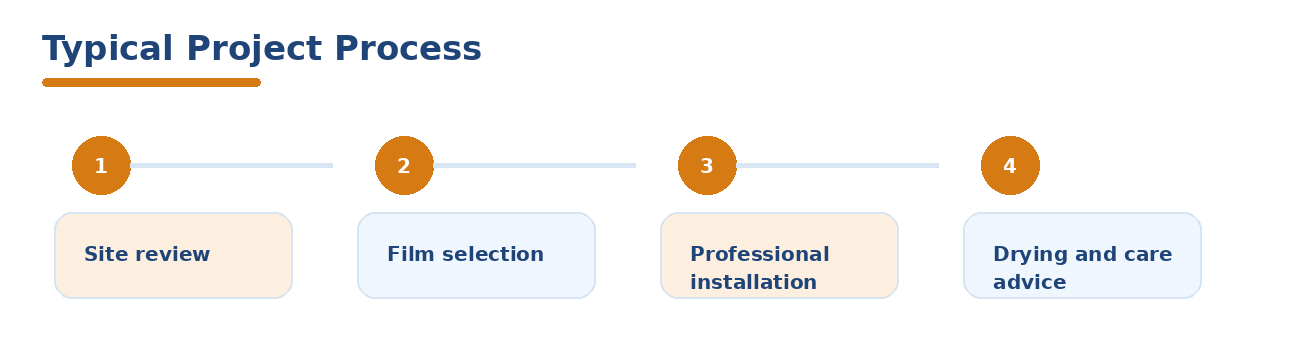
A professional HDB window film installation starts with checking the glass, taking accurate measurements and confirming the chosen film. The glass is then cleaned thoroughly because dust, debris and residue can become visible beneath the film. The installer applies the film using an installation solution, positions it carefully, removes excess liquid and trims the edges.
Immediately after installation, a small amount of moisture, haze or tiny water pockets may remain while the film cures. The appearance normally becomes clearer as the remaining moisture evaporates, although curing time varies with the film, weather, glass and installation conditions. Newly filmed windows should not be cleaned until the installer confirms that the film has cured sufficiently.
After curing, use soft, non-abrasive materials. Avoid razor blades, abrasive pads and harsh tools that can scratch the film surface. Following the supplier's care instructions helps preserve appearance and performance over the product's service life.
HDB Window Film Cost: What Affects the Quotation?
Window film pricing is normally influenced by more than the floor area of the flat. The total glazed area, number and size of panes, film series, access, glass configuration, removal of existing film and installation complexity can all affect the quotation. Large sliding panels may be straightforward, while small divided panes or difficult access can increase labour.
Solar Heroes currently states that its solar films start from S$4.80 per square foot and are supplied with a minimum five-year onsite warranty, subject to the applicable product and warranty terms. The most useful way to compare quotations is to look at the exact film model, published specifications, warranty, glass compatibility and installation scope rather than price per square foot alone.
For homeowners who are uncertain, prioritising the hottest or most problematic windows can also be practical. A site assessment can identify whether a full-flat installation is necessary or whether the west-facing living room and bedrooms are the main areas worth addressing first.
Why Choose Solar Heroes for HDB and BTO Window Film?
Solar Heroes focuses on architectural solar-control window film for Singapore's tropical environment. Its current product range includes nano-carbon hybrid, metallised, nano-ceramic and multilayer polyester technologies, allowing recommendations to be matched to different needs instead of pushing a single film for every room.
For HDB and BTO households, the most valuable part of the process is comparison on the actual glass. A free consultation or onsite product demonstration can help owners see how a proposed film changes daylight, reflection and exterior views before committing to a larger installation. That approach is particularly useful when several family members have different preferences about room brightness.
A suitable film should improve comfort without creating a new problem. The goal is to find the best balance for the home, not simply select the highest number on a specification sheet.
Frequently Asked Questions
Will window film make my HDB flat too dark?
Not necessarily. Higher-VLT options are designed to retain more visible light. The right choice depends on sun exposure and how bright you want the room to remain.
Is solar film useful for west-facing HDB windows?
Yes. West-facing windows often receive strong afternoon sun, so solar-control film can be useful for reducing solar heat and glare through the glass.
Can I use different films in different rooms?
Yes. In many homes that is the better approach because living rooms, bedrooms and studies can have different orientations and comfort priorities.
Does reflective film provide privacy at night?
Not reliably. Reflective privacy depends on lighting conditions and can weaken or reverse when the inside is brighter than outside. Curtains or blinds are still recommended for night privacy.
Can window film be installed on every type of glass?
No. Compatibility should be checked for the specific glass, especially Low-E, laminated, insulated or specialised glazing.
How should I compare solar films?
Compare VLT, VLR and TSER together, then consider appearance, glass compatibility, warranty and installation quality.
Can window film stop all heat from entering my flat?
No. It can reduce the solar heat entering through glass, but heat can also enter through walls, roofs, ventilation and other sources.
Should I install film before or after renovation?
Either is possible, but installation can be easier before furniture and soft furnishings are in place. The final choice should still be tested against the intended room brightness and design.
A Practical Next Step
A more comfortable HDB or BTO does not require choosing the darkest film available. It requires choosing the right film for the actual glass, orientation and way each room is used. Solar Heroes can assess the windows, demonstrate suitable samples and recommend a film based on daylight, heat, glare, privacy and budget. For homeowners who want to solve a specific hot-window problem or plan a full-home installation, an onsite assessment is the most reliable place to start.
Get a Window Film Recommendation
Contact Solar Heroes for a free consultation and onsite demonstration to compare suitable film options on your actual glass.
Request a Free Consultation